Research Article | | Peer-Reviewed

ICT and Its Impact on the Scientific Literacy of Secondary School Students: A Comparative Study Between Singapore and the USA in PISA 2022

Received: 24 December 2024     Accepted: 7 April 2025     Published: 29 April 2025
Views:       Downloads:
Abstract

This study investigates the relationship between Information and Communication Technology (ICT) use and secondary students’ scientific literacy in Singapore and the United States, drawing on data from the 2022 Programme for International Student Assessment (PISA). By comparing two contrasting national contexts—Singapore’s centralized, academically aligned ICT strategies and the United States’ decentralized and heterogeneous implementation—this research explores how ICT usage, access, and instructional quality shape student outcomes in science education. Employing hierarchical cluster analysis and two-level Hierarchical Linear Modeling (HLM), the study addresses three core questions: (1) How do ICT usage patterns differ between students in Singapore and the U.S.? (2) What are the distinctive features of ICT engagement in each context? and (3) To what extent do ICT-related factors predict students’ scientific literacy? The analysis reveals that although U.S. students report higher frequency of ICT use, particularly for leisure or informal purposes, Singaporean students experience more structured, curriculum-integrated ICT environments—associated with greater digital self-efficacy and stronger academic outcomes in science. Crucially, the study identifies school climate and teacher capacity as key mediators of ICT’s educational impact. In Singapore, strong professional development, clearly defined pedagogical goals, and coordinated extracurricular programs amplify the benefits of digital tools. Conversely, in the U.S., fragmented ICT integration and limited teacher support undermine the potential of technology to enhance scientific understanding. The findings underscore the importance of intentional and pedagogically coherent ICT implementation. Rather than viewing technology as a neutral or inherently beneficial tool, this study argues that its effectiveness depends on system-level alignment with teaching practices, professional development, and equitable resource distribution. The results offer actionable implications for education policymakers and leaders: a structured, goal-driven approach to ICT—supported by trained educators and inclusive infrastructures—is critical to advancing scientific literacy in the digital age. Future research should extend this cross-national analysis to broader subject areas and more diverse educational systems to inform global strategies for equitable and effective technology integration.

Published in Science Journal of Education (Volume 13, Issue 2)
DOI 10.11648/j.sjedu.20251302.13
Page(s) 69-81
Creative Commons

This is an Open Access article, distributed under the terms of the Creative Commons Attribution 4.0 International License (http://creativecommons.org/licenses/by/4.0/), which permits unrestricted use, distribution and reproduction in any medium or format, provided the original work is properly cited.

Copyright

Copyright © The Author(s), 2025. Published by Science Publishing Group

Keywords

Information and Communication Technology (ICT), Scientific Literacy, Science Education, Secondary School Students, Comparative Study

1. Introduction
The global integration of information and communication technologies (ICT) into education has become a central policy focus, with countries making substantial investments in infrastructure and training . However, a critical question remains: Do these investments improve student learning outcomes, particularly in scientific literacy? While national policies often guide ICT adoption, schools retain significant autonomy in implementing these technologies, presenting opportunities and challenges. Educators must make strategic decisions about using ICT effectively to enhance student outcomes, especially in science education, where the relationship between technology use and academic performance remains complex.
This study distinguishes itself by examining the ICT usage patterns and their impact on scientific literacy through a comparative lens, focusing on Singapore and the United States—two countries with contrasting yet complementary educational systems. Singapore, consistently a top performer in PISA assessments , has adopted a highly structured, academically focused approach to ICT integration, resulting in more purposeful engagement and substantial educational outcomes. In contrast, the U.S. demonstrates a more decentralized approach, with widespread access to technology with varying degrees of integration into academic benefits. This comparative analysis offers valuable insights into how national ICT policies and educational practices shape student engagement and academic achievement of scientific literacy.
This research combines hierarchical clustering techniques with two-level hierarchical linear modeling (HLM) to capture the complexity of ICT usage behaviors. By separating variables based on the different focus of ICT assessments, this study ensures a more robust and accurate analysis, offering more profound insights into the interplay between ICT use, educational policies, and student outcomes. The findings contribute to the growing body of research on educational technology and provide practical guidance for international policymakers on how to better structure and support ICT integration to enhance scientific literacy and overall academic performance.
2. Literature Review
2.1. ICT Usage of Secondary Schools in PISA
Since 2006, PISA has used the ICT Familiarity Questionnaire to assess students' engagement with various digital tools, such as computers and tablets. The questionnaire evaluates students' attitudes toward ICT, their self-efficacy, and how they use ICT across different settings . As a vital tool for comparative education research, PISA data has enabled scholars to explore how ICT is integrated into education systems across different countries.
In 2011, Tømte and Hatlevik analyzed ICT user profiles in Finland and Norway, finding significant differences in ICT self-efficacy based on the frequency of ICT use for academic and entertainment purposes . Similarly, Zhong employed PISA data from 2003 and 2006 to explore how national, school and individual factors shape students' digital skills . The study found that national ICT investments alone do not guarantee improvements in digital skills; home access to ICT, socioeconomic status, and individual experiences play a crucial role. These findings underscore how PISA data serves as a valuable resource for understanding global ICT usage patterns in education.
2.2. The Impact of ICT Usage on Scientific Literacy
As defined by PISA, scientific literacy refers to the ability to apply scientific knowledge in real-world situations, emphasizing problem-solving and critical thinking rather than rote memorization . Numerous studies have investigated the relationship between ICT usage and scientific literacy using PISA data, exploring how home computer use, school-level ICT access, and the broader school environment affect student outcomes.
Papanastasiou et al. examined ICT usage and scientific literacy in the U.S. and Germany, revealing that U.S. students who used ICT for digital communication had higher scientific literacy . In contrast, this pattern did not hold in Germany. Spiezia found that in some OECD countries, home computer use had a more substantial positive effect on scientific literacy than school use .
Multilevel linear modeling (MLM) has been widely employed to analyze the complex relationship between ICT and academic achievement. Luu and Freeman used MLM to compare students in Canada and Australia, finding that academic use of ICT at school had a more substantial impact on scientific literacy than access to technology alone . Zhang analyzed multiple rounds of PISA data, confirmed that the relationship between ICT and scientific literacy depends on individual and school-level factors, such as socioeconomic status and school ICT infrastructure .
Recent studies have also highlighted teachers’ significant role in shaping ICT’s impact on scientific literacy. Teacher engagement and adaptability to new technologies have positively affected students’ outcomes. At the same time, ICT also enables teachers in areas with adequate technological infrastructure to reach students and communities in geographically isolated locations .
While prior research has explored the role of ICT usage in scientific literacy, this study advances the integration of teacher-related factors, teacher-related school climate, and ICT patterns with a combination of hierarchical clustering techniques with two-level HLM into the analysis, provides a more comprehensive understanding of how these elements interact to influence scientific literacy.
2.3. Rationals for Selecting the Comparison Countries
The selection of Singapore and the United States for comparison in this study arises from their distinctive educational approaches and disparate performances in PISA since Singapore first joined in 2009 in scientific literacy. Both countries have developed sophisticated strategies for integrating ICT into education. However, their divergent trajectories and underlying educational philosophies provide an invaluable comparative lens for international scholars studying the role of digital technology in learning. Uncovering these two nations' similarities and differences in terms of ICT usage and scientific literacy development is inspiring.
In the United States, disparities in ICT access, influenced by socioeconomic and geographic factors, create uneven levels of integration across its decentralized education system . This makes the U.S. a compelling case for examining how ICT is employed within varied educational contexts and how these differences impact student outcomes. In contrast, Singapore’s focus on cultivating critical skills for a knowledge-based economy and equitable access to ICT resources has resulted in consistently high academic performance with minimal achievement gaps . For international scholars, the comparison between the U.S. and Singapore offers critical insights into how differing systems of governance, policy implementation, and resource distribution shape the effectiveness of ICT in enhancing educational outcomes, particularly in scientific literacy.
3. Research Methods
3.1. Research Questions
This study seeks to address three primary research questions. First, it examines whether there are significant differences in ICT usage patterns among secondary school students in Singapore and the United States. Second, it aims to identify and summarize the distinctive characteristics of ICT usage within these two countries. Third, the study investigates the extent to which students' scientific literacy in Singapore and the United States can be explained by individual ICT usage and the availability of ICT resources in schools while also exploring how education policies and the role of teachers mediate the relationship between ICT usage and scientific literacy in both contexts.
3.2. Data Selection
This study uses data from the PISA 2022, focusing on students’ ICT usage, school ICT access, individual background, and scientific literacy scores. Variables include ICT usage inside and outside school for inquiry-based and leisure activities, as well as the quality, availability, and accessibility of ICT resources. School policies on ICT, students’ digital self-efficacy, and individual background details (gender and economic, social, cultural status) were also included.
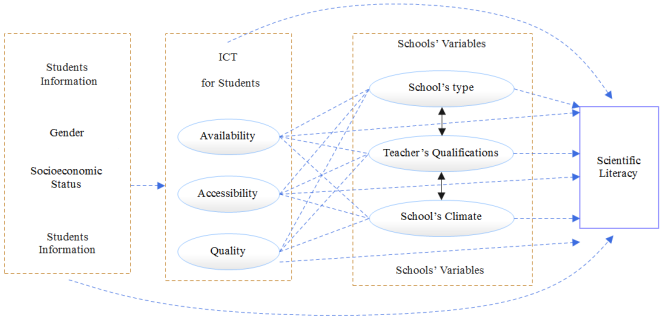
For analysis, the students’ variables were grouped into three categories: availability, accessibility, and quality of ICT resources, along with individual characteristics, as shown in Table 1. This structure is consistent with PISA and enables a thorough comparison of ICT usage and its relationship with scientific literacy between U.S. and Singaporean students.
Table 1. Students’ Variables.

Variables

Definition of Variables

Question Number

Students’ Variables Related to ICT

Availability of ICT Resources

In-School Usage (ICTAVSCH)

Availability and usage of ICT at school

IC170

Out-of-School Usage (ICTAVHOM)

Availability and usage of ICT outside of school

IC171

Activity-Based Usage (ICTENQ)

Use of ICT in enquiry-based learning activities

IC174

Out-of-Classroom Usage (ICTOUT)

Use of ICT for school activities outside of the classroom

IC 176

Weekday Leisure (ICTWKDY)

Frequency of ICT activity – Weekday

IC177

Weekend Leisure (ICTWKEND)

Frequency of ICT activity – Weekend

IC178

Accessibility of ICT Resources

School Policies (ICTREG)

Views of regulated ICT use in school

IC179

Quality of ICT Resources

Resource Availability (ICTQUAL)

Quality of access to ICT

IC172

Feedback Interaction (ICTFEED)

Support or feedback via ICT

IC175

Online Experiences (ICTINFO)

Students practices regarding online information

IC180

Overall Perception (ICTEFFIC)

Self-efficacy in digital competencies

IC183

Individual Information

Gender

Female/Male

ST004

ESCS

Economic Social Cultural Status

Multiple Questions

School-level data were collected through questionnaires completed by participating school principals . As outlined in Table 2, these variables include whether the school is public or private, the total number of teachers with national qualifications, the proportion of teachers with bachelor’s, master’s, and doctoral degrees, student-related factors affecting the school climate, teacher-related factors affecting the school climate, and the availability of extracurricular activities.
Table 2. Schools’ Variables.

Variables

Definition of Variables

Question Number

Schools’ Type

Public or Private (PUBLICPR)

Public or Private School

SC013

Teachers’ Qualification

Proportion of all teachers fully certified (PROATCE)

The number of full-time and part-time teachers fully certified by the appropriate authority

SC018Q02TA01-02

Proportion of all teachers with at least ISCED level 6 bachelor qualification (PROPAT6)

The number of full-time and part-time teachers with Bachelor’s or equivalent level qualification

SC018Q08JA01-02

Proportion of all teachers with at least ISCED level 7 master qualification (PROPAT7)

The number of full-time and part-time teachers with Master’s or equivalent level) qualification

SC018Q08JA01-02

Proportion of all teachers with at least ISCED level 8 doctor qualification (PROPAT8)

The number of full-time and part-time teachers with Doctor’s or equivalent level) qualification

SC018Q08JA01-02

Schools’ Climate

Student-related factors affecting school climate (STUBEHA)

The extent to which student learning is hindered by student behaviors (e.g., "Student truancy," "Student use of alcohol or illegal drugs")

SC061

Teacher-related factors affecting school climate (TEACHBEHA)

The extent to which student learning is hindered by teacher behaviors (e.g., "Teacher absenteeism," "Staff resisting change").

SC061

Extracurricular activities offered (ALLACTIV)

What extracurricular activities their schools offered

SC053

Scientific literacy is measured using the PISA scale, with scores standardized to a mean of 500 and a standard deviation of 100, typically between 200 and 800 . Since 2015, PISA has used computer-based testing, requiring students to complete 30 randomly assigned questions within one hour. These questions assess scientific literacy across four key dimensions: scientific literacy skills (explaining phenomena, evaluating scientific inquiry, interpreting data), knowledge type (content, procedural, epistemic), content domain (physical, biological, and earth/space sciences), and cognitive demand (low, medium, high). Students’ scientific literacy scores are recorded under the variable PVSCIE , offering a comprehensive measure of scientific understanding across various dimensions.
3.3. Data Preparation
Prior to analysis, a thorough data screening process was conducted. First, student and school data from Singapore and the United States, participating in PISA 2022, were extracted from the OECD dataset. Cases with missing values were excluded, as multilevel modeling (MLM) does not permit missing data. Consistency between student and school datasets was ensured, with no unpaired data. The final sample included 5,871 students (50.6% male, 49.4% female) from 152 schools in Singapore and 2,266 students (49.2% male, 50.7% female, 0.1% not applicable) from 108 schools in the U.S.
For the first research question, an independent sample T-test was conducted using SPSS 29.02 to compare ICT usage between students in the two countries. All variables were standardized to a mean of 0 and standard deviation of 1 to facilitate comparability and prepare for multilevel linear modeling (MLM). The second research question was addressed using hierarchical clustering in SPSS 29.02, which clustered ICT usage patterns based on variable characteristics, allowing for the identification of distinct usage trends between Singaporean and U.S. students. Multilevel linear modeling (MLM) was conducted for the third research question using HLM 8.2. Student-level data were treated as the first-level data, nested within school-level data (second-level).
The analysis proceeded through several steps: First, a null model was run to calculate the Intra-Class Correlation (ICC) to determine if multilevel analysis was appropriate. An ICC of >0.100 indicated significant between-school variation. Then, a random-coefficient regression model was tested at the student level, and non-significant variables were excluded. Next, the same model was tested at the school level, and non-significant variables were excluded. Lastly, the final comprehensive model included all significant variables from both levels to explain the impact of ICT usage on scientific literacy.
Figure 1. Conceptual Framework.
4. Results
4.1. Differences in ICT Usage Between Students in Singapore and the U.S.
Table 3 presents a comprehensive comparison of ICT usage between Singaporean and U.S. students, focusing on the availability, accessibility, and quality of ICT resources. The data reveals significant differences in how students from both countries engage with ICT in academic and non-academic settings.
U.S. students report significantly higher ICT usage both in and outside of school. For in-school usage, U.S. students have a mean score of 0.74 compared to Singapore’s 0.04 (t = -5.57, p < 0.001), and out-of-school usage follows a similar pattern, with U.S. students scoring 0.81 and Singaporean students scoring 0.01 (t = -3.50, p < 0.001). U.S. students also demonstrate higher engagement in out-of-classroom activities, with a mean score of 1.10 compared to Singapore’s 0.35 (t = -10.73, p < 0.001).
Activity-based ICT usage is higher for U.S. students (mean = 1.00) compared to their Singaporean counterparts (mean = 0.12), with a t-value of -16.92 (p < 0.001). Not only for school, U.S. students engage more frequently in ICT for leisure activities during both weekdays and weekends. Weekday leisure use for U.S. students has a mean score of 1.00, while Singaporean students report -0.11 (t = -7.31, p < 0.001). The same pattern holds for weekend ICT usage, where U.S. students score 1.02 compared to Singapore’s -0.04 (t = -5.33, p < 0.001). Additionally, U.S. students experience fewer restrictions on ICT use due to more flexible school policies (mean = 0.07) compared to Singaporean students (mean = 0.18), as reflected by a t-value of 6.24 (p < 0.001).
Regarding ICT quality, U.S. students report higher availability of ICT resources, with a mean score of 0.94, surpassing Singapore's 0.65 (t = 15.19, p < 0.001). U.S. students also experience more frequent feedback through digital resources (mean = 1.04) than their Singaporean counterparts (mean = 0.22), with a t-value of -7.74 (p < 0.001). Online engagement is similarly higher among U.S. students (mean = 0.93) compared to Singaporean students (mean = 0.32), with a t-value of 6.942 (p < 0.001). Furthermore, the overall perception of ICT efficacy is higher among U.S. students, reflected by a mean score of 1.05, compared to 1.07 in Singapore (t = 6.892, p < 0.001).
Overall, U.S. students engage with ICT more frequently across all settings, particularly leisure activities, reflecting a more open and flexible approach to ICT integration. In contrast, though less frequent ICT users, Singaporean students may benefit from a more structured and academically focused use of digital resources, potentially fostering higher self-efficacy in digital skills. These findings highlight broader cultural and educational differences between the two countries in how ICT is integrated into students’ lives, with U.S. students experiencing more informal, diverse technology exposure and Singaporean students engaging in more targeted, academic-focused ICT use.
Table 3. Comparison of ICT Usage, Accessibility, and Resource Quality Among Students in Singapore and the United States.

Variables

Singapore

United States

t

p

M

SD

M

SD

Availability of ICT Resources

In-School Usage (ICTAVSCH)

0.04

0.80

0.13

0.74

-5.57

< 0.001

Out-of-School Usage (ICTAVHOM)

0.01

0.86

0.07

0.81

-3.50

<0.001

Out-of-Classroom Usage (ICTOUT)

0.35

0.97

0.59

1.10

-10.73

<0.001

Activity-Based Usage (ICTENQ)

0.12

0.87

0.45

0.92

-16.92

<0.001

Weekday Leisure (ICTWKDY)

-0.11

0.91

0.04

1.00

-7.31

<0.001

Weekend Leisure (ICTWKEND)

-0.04

0.91

0.08

1.02

-5.33

<0.001

Accessibility of ICT Resources

School Policies (ICTREG)

0.18

0.90

0.07

0.80

6.24

<0.001

Quality of ICT Resources

Resource Availability (ICTQUAL)

0.65

1.02

0.32

0.94

15.19

<0.001

Feedback Interaction (ICTFEED)

0.22

0.97

0.39

1.04

-7.74

<0.001

Online Experiences (ICTINFO)

0.32

1.01

0.18

0.93

6.942

<0.001

Overall Perception (ICTEFFIC)

1.07

9.39

0.24

1.05

6.892

<0.001

4.2. Similarities and Differences of ICT Usage Characteristics
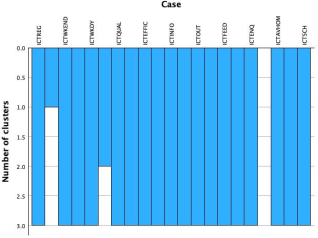
Tables 4 and 5 summarize the differences in how ICT is integrated into students’ daily routines, educational activities, and leisure pursuits in Singapore and the U.S.
Singaporean Students’ Structured and Regulated ICT Usage
In Cluster 1, Singaporean students are guided by school policies regulating ICT use (ICTREG), and this structured approach to ICT regulation within schools is associated with students developing self-efficacy in digital competencies (ICTEFFIC). Cluster 3 students emphasize the availability and quality of ICT resources at school and home (ICTAVSCH, ICTAVHOM, ICTQUAL), further indicating structured support and reliance on institutional ICT resources. These patterns suggest that Singaporean students’ ICT usage is influenced heavily by school policies and the availability of institutional resources, which regulate how they engage with technology for academic and personal tasks. The emphasis on self-efficacy and regulated use of ICT supports the notion that their engagement with technology is more structured and formalized.
Table 4. ICT Usage Characteristics (Singaporean Students).

Singaporean Students’ ICT Usage Characteristics

Cluster 1

Cluster 2

Cluster 3

ICTEFFIC

Self-efficacy in Digital Competencies

ICTWKDY

Weekday ICT Leisure

ICTQUAL

Quality of ICT Resources

ICTWEND

Weekend ICT Leisure

ICTAVHOM

Availability and Usage of ICT Outside of School

ICTOUT

Out-of-Classroom ICT Usage

ICTREG

Views on Regulated ICT Use in Schools

ICTENQ

Inquiry-Based ICT Usage

ICTSCH

School-Specific ICT Use

ICTFEED

Feedback Interaction via ICT

ICTINFO

Online Experiences

American Students’ Varied ICT Usage
Cluster 1 for American students similarly focuses on school policies regulating ICT use (ICTREG), showing some regulation in ICT engagement. However, Cluster 2 is dedicated to weekday and weekend leisure ICT usage (ICTWKDY, ICTWEND), reflecting a more recreational and non-academic use of ICT. This indicates that American students have groups that focus heavily on leisure activities. In contrast, Cluster 4 students focus on more academic uses of ICT, such as out-of-classroom ICT usage (ICTOUT), inquiry-based learning (ICTENQ), and feedback interactions via ICT (ICTFEED), reflecting high academic engagement through ICT. The patterns in Cluster 3 reflect high self-efficacy in digital competencies (ICTEFFIC), similar to Singaporean students in Cluster 1, but also show engagement with online experiences (ICTINFO). This varied approach among American students—with some clusters focused on academic uses (Cluster 4) and others on personal or leisure uses (Cluster 2)—illustrates that their ICT usage is less uniformly structured compared to their Singaporean counterparts, who have a more substantial alignment with school policies and academic-focused use.
Emphasis on ICT Resource Quality and Availability
Both Singaporean Cluster 3 and American Cluster 3 emphasize the availability and quality of ICT resources (ICTAVSCH, ICTAVHOM, ICTQUAL), demonstrating that students in both countries benefit from high-quality ICT resources for their academic and personal use.
While Singaporean students’ ICT usage tends to be more structured and regulated, particularly within school environments, American students display a broader range of ICT engagement, with some clusters focused on leisure and others on academic, inquiry-based uses. Both countries show the importance of ICT resource quality, though the extent to which these resources are applied in academic contexts differs based on institutional and educational structures.
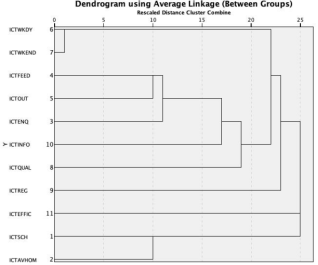
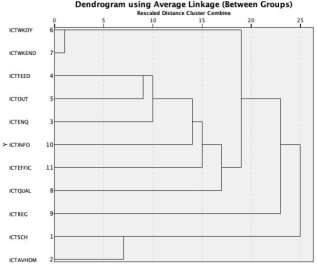
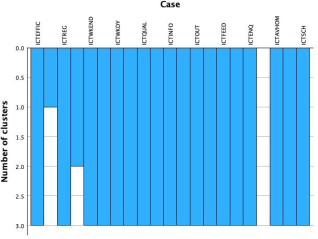
The hierarchical clustering analysis, presented in Figures 2 to 5, further reveals these differences in ICT usage patterns between the two countries. The dendrograms in Figures 2 and 3 illustrate the clustering of ICT usage variables, where Singaporean students demonstrate precise segmentation between educational and leisure ICT use. In contrast, U.S. students blend ICT usage across different domains. Figures 4 and 5 visually depict these relationships, with variables grouped based on similarity in usage patterns. Singaporean students exhibit more defined groupings, particularly in inquiry-based learning and out-of-classroom ICT use. In contrast, U.S. students display a more fluid integration of ICT across academic and personal settings.
Table 5. ICT Usage Characteristics (American Students).

American Students’ ICT Usage Characteristics

Cluster 1

Cluster 2

Cluster 3

Cluster 4

ICTREG

Views on Regulated ICT Use in Schools

ICTWKDY

Weekday ICT Leisure

ICTQUAL

Quality of ICT Resources

ICTOUT

Out-of-Classroom ICT Usage

ICTFEED

Feedback Interaction via ICT

ICTEFFIC

Self-efficacy in Digital Competencies

ICTENQ

Inquiry-Based ICT Usage

ICTWEND

Weekend ICT Leisure

ICTAVHOM

Availability and Usage of ICT Outside of School

ICTINFO

Online Experiences

ICTSCH

School-Specific ICT Use

Figure 2. Dendrogram of Singaporean Students’ ICT Usage.
Figure 3. Dendrogram of U.S. Students’ ICT Usage.
Figure 4. Hierarchical Clustering of ICT Usage in Singapore.
Figure 5. Hierarchical Clustering of ICT Usage in the U.S.
4.3. Relationship of ICT Usage and Scientific Literacy
The results from the two-level HLM analysis, shown in Table 6, provide insightful findings on how the availability, accessibility, and quality of ICT resources, along with school-level variables, influence scientific literacy scores among Singaporean and U.S. students.
ICT Availability: In-School and Out-of-School Usage
In Singapore, in-school ICT availability shows a positive but not statistically significant relationship with scientific literacy. On the other hand, out-of-school ICT usage reveals a strong negative and statistically significant relationship with scientific literacy (***p < 0.001). This finding indicates that their scientific literacy scores can decline when students use ICT resources outside the classroom without adequate structure or purpose. This could be due to excessive unproductive or leisure-based ICT use. In the U.S., in-school ICT availability does not significantly affect scientific literacy. Like in Singapore, out-of-school ICT usage shows a negative trend (coefficient = -5.27), although it is not statistically significant. This aligns with the notion that ICT use outside the classroom may only be conducive to scientific learning if purposefully integrated with students' academic work.
ICT Accessibility
In both countries, ICT accessibility within schools is associated with a positive impact on scientific literacy, although the effect is only statistically significant in Singapore (coefficient = 20.16, *p < 0.05). This indicates that ensuring students can easily access ICT resources at school is particularly important in Singapore, where it appears to help students engage more effectively in science education. In the U.S., ICT accessibility has a positive coefficient (11.63) but is not statistically significant. This suggests that while providing ICT access is beneficial, additional factors such as the quality of usage and integration into teaching practices likely play a role in determining its overall effectiveness.
ICT Quality
The quality of ICT resources appears to have a limited impact on scientific literacy in both Singapore and the U.S. In Singapore, none of the ICT quality measures—whether resource availability (coefficient = 1.684), feedback interaction (coefficient = -2.837), or online experiences (coefficient = 9.602)—show statistically significant effects. Similarly, in the U.S., while online experiences show a positive trend (coefficient = 17.914), it is not statistically significant. This suggests that the quality of ICT resources alone is insufficient to improve scientific literacy. The findings imply that simply having high-quality ICT tools or encouraging online engagement is insufficient; how these resources are utilized within a pedagogical framework likely matters more.
School Climate: Student and Teacher Behavior
The student-related factors affecting school climate do not significantly impact scientific literacy in either Singapore or the U.S. However, the effect is more pronounced in the U.S. (coefficient = 15.653) compared to Singapore (coefficient = 3.055). This could suggest that disruptive student behavior, while concerning, does not directly and significantly impact science performance when other support mechanisms are in place, such as teacher quality or access to ICT.
Teacher-related factors, however, have a more significant impact, particularly in the U.S. In Singapore, teacher-related issues such as absenteeism or resistance to change do not significantly affect scientific literacy (coefficient = -15.83). In the U.S., however, these teacher-related issues negatively and statistically significantly impact scientific literacy (coefficient = -22.88, *p < 0.05). This finding underscores the importance of robust and engaged teaching staff in improving student performance in science. Teacher absenteeism or resistance to change may prevent students from fully benefiting from available ICT resources or structured scientific learning activities.
Teacher Qualifications
In Singapore, the proportion of teachers with doctoral qualifications has a statistically significant positive impact on scientific literacy (coefficient = 4.722, *p < 0.05), suggesting that highly educated teachers with advanced degrees contribute to better science outcomes. This implies that teacher expertise facilitates student understanding of complex scientific concepts, particularly at the doctoral level. In the U.S., however, the qualifications of teachers—whether they hold a bachelor’s, master’s, or doctoral degree—do not significantly affect scientific literacy. While teachers with higher degrees show a slight positive trend, the results suggest that teacher qualifications alone may not be enough to drive improvements in scientific literacy without complementary factors such as teaching quality, engagement, or support from the school environment.
Extracurricular Activities
The provision of extracurricular activities shows a striking contrast between Singapore and the U.S. In Singapore, extracurricular activities significantly and positively impact scientific literacy (coefficient = 1.625, ***p < 0.001). This highlights the importance of these activities to enhance students’ engagement with scientific concepts outside the traditional classroom setting. Structured activities such as science clubs or competitions can improve scientific performance. In contrast, in the U.S., the provision of extracurricular activities only significantly impacts scientific literacy. It even shows a negative trend (coefficient = -13.377), which is not statistically significant. This could indicate that the nature or structure of extracurricular programs in the U.S. might not be as directly aligned with improving scientific outcomes as in Singapore.
5. Conclusion and Discussion
This comparative analysis between Singapore and the U.S. highlights important lessons for international scholars and policymakers in educational technology and scientific literacy. The contrasting ways students engage with ICT in these two countries offer valuable insights into how digital resources can be more effectively integrated into educational systems to promote academic outcomes, particularly in science education.
One of the most striking insights is the role of structured versus unstructured ICT usage. Singaporean students demonstrate a more controlled, academically focused approach to ICT engagement, linked to more purposeful and beneficial outcomes in scientific literacy. Increasing access to technology does not automatically translate into better academic performance. For policymakers, integrating ICT into the curriculum must go beyond availability; it requires designing structured environments where technology use is aligned with clear educational goals. Countries looking to improve their education systems should focus on how ICT can be embedded into teaching practices to enhance inquiry-based learning and critical thinking.
Furthermore, the findings underscore the importance of ICT accessibility within schools. Singapore’s success in ensuring positive impacts on scientific literacy through ICT accessibility indicates that equity in access within the school environment is essential for maximizing the potential benefits of digital tools. Policymakers should consider reducing digital divides within schools, ensuring that all students have equal access to high-quality ICT resources regardless of socioeconomic status.
Another significant finding pertains to the quality of teaching staff. Singapore’s emphasis on highly qualified teachers, especially those with advanced degrees, is associated with better student outcomes in science. This reinforces the need to invest in teacher education and professional development for international scholars and policymakers. Highly trained teachers equipped with content expertise and technological skills are better positioned to integrate ICT into their teaching in ways that meaningfully enhance student learning. This is particularly relevant for developing countries, where the focus should be on improving access to technology and raising the standards of teacher qualifications to improve educational outcomes.
School climate also emerges as a crucial factor. In the U.S., where teacher absenteeism and resistance to change negatively impact scientific literacy, there is a clear need for policies that promote a more positive and dynamic school environment. Teacher engagement and adaptability are crucial to fostering a culture of learning that can take full advantage of technological innovations. This finding echoes previous studies on younger children’s science education that teacher plays a crucial role in shaping students’ attitudes . Policymakers should focus on creating incentives and support structures that encourage continuous professional development and innovation among teachers, ensuring they can effectively integrate new technologies into their classrooms.
Extracurricular activities are a significant driver of success in Singapore’s educational system, where they positively and significantly impact scientific literacy. For policymakers, this suggests that fostering out-of-classroom learning opportunities can enhance students’ academic experiences, especially in science. Countries can extend learning beyond the classroom by supporting programs such as science clubs, competitions, and other STEM-related activities and engage students more deeply in scientific inquiry.
Finally, the study highlights the importance of balancing leisure and academic ICT usage. In the U.S., where the boundaries between these two technology uses are less defined, students may need to reap the full educational benefits of ICT. Policymakers and educators should work to promote a balanced approach to ICT usage, helping students differentiate between personal and academic use. Students can better harness ICT’s potential to improve their academic performance by encouraging purposeful engagement with technology.
This comparative study provides critical insights into how countries can better integrate ICT into their education systems to improve scientific literacy. Investing in teacher quality, enhancing school climate, and providing enriching extracurricular opportunities are all essential for maximizing the educational benefits of ICT. Similar to most studies that utilize secondary data, this study has limitations. Firstly, despite the large volume of data, it is impossible to control the types and content of the questions, and certain variables not included in the questionnaires might also have predictive effects on academic performance. Secondly, the learning models, tools, and strategies targeted by ICT are diverse, and the impact of technology may vary depending on multiple factors. Further in-depth analysis is required, incorporating relevant case studies, to elucidate how ICT influences students’ academic performance.
Table 6. The relationship between ICT and science literacy of students in Singapore and the U.S.

Availability of ICT Resources

Singapore

U.S.

Coefficient

t-ratio

Coefficient

t-ratio

Availability of ICT Resources

In-School Usage (ICTAVSCH)

21.389522

1.918

-8.425800

-0.480

Out-of-School Usage (ICTAVHOM)

-45.738854

-4.797***

-5.272195

-0.403

Activity-Based Usage (ICTENQ)

6.490044

0.436

1.216775

0.108

Out-of-Classroom Usage (ICTOUT)

21.415098

2.24*

8.241652

0.880

Weekday Leisure (ICTWKDY)

-4.145336

-0.361

-14.715529

-0.767

Weekend Leisure (ICTWKEND)

-11.498798

-0.900

-7.021879

-0.448

Individual Information

Gender

3.604243

0.233

9.392685

0.564

ESCS

47.932625

5.503***

39.421469

4.155***

School’s Type

Public or Private (PUBLICPR)

-44.752909

-1.563

0.114676

0.324

Teachers’ Qualification

The proportion of all teachers fully certified (PROATCE)

-0.614593

-2.468*

0.003840

0.012

Proportion of all teachers with at least ISCED level 6 bachelor qualification (PROPAT6)

0.246279

0.655

-0.284843

-1.207

Proportion of all teachers with at least ISCED level 7 master qualification (PROPAT7)

0.131545

0.401

0.537119

1.415

Proportion of all teachers with at least ISCED level 8 doctor qualification (PROPAT8)

6.446992

3.084**

2.045888

0.549

School’s Climate

Student-related factors affecting school climate (STUBEHA)

-1.756294

-0.222

19.022161

2.113*

Teacher-related factors affecting school climate (TEACHBEHA)

-12.836943

-1.257

-23.842943

-2.435*

Extracurricular activities offered (ALLACTIV)

1.184127

4.020***

-14.412012

-1.230

Accessibility of ICT Resources

Singapore

The U.S.

Coefficient

t-ratio

Coefficient

t-ratio

Accessibility of ICT Resources

School Policies (ICTREG)

20.157888

1.925*

11.627816

1.480

Individual Information

Gender

13.744177

0.940

14.846504

0.863

ESCS

59.285725

7.075***

42.476358

4.987***

School’s Type

Public or Private (PUBLICPR)

-26.818386

-1.091

0.433078

1.553

Teachers’ Qualification

Proportion of all teachers fully certified (PROATCE)

-0.499612

-1.956*

-0.170684

-0.586

Proportion of all teachers with at least ISCED level 6 bachelor qualification (PROPAT6)

0.117614

0.349

-0.248307

-1.139

Proportion of all teachers with at least ISCED level 7 master qualification (PROPAT7)

0.168458

0.533

0.668474

1.775

Proportion of all teachers with at least ISCED level 8 doctor qualification (PROPAT8)

5.230338

2.125*

2.584804

0.677

School’s Climate

Student-related factors affecting school climate (STUBEHA)

3.656410

0.449

20.453131*

2.071

Teacher-related factors affecting school climate (TEACHBEHA)

-16.577444

-1.600

-26.798500

-2.760**

Extracurricular activities offered (ALLACTIV)

1.570949

6.000***

-11.745347

-1.009

Quality of ICT Resources

Singapore

U.S.

Coefficient

t-ratio

Coefficient

t-ratio

Quality of ICT Resources

Resource Availability (ICTQUAL)

1.684274

0.212

2.137089

0.243

Feedback Interaction (ICTFEED)

-2.837837

-0.353

0.550072

0.060

Online Experiences (ICTINFO)

9.601552

1.180

17.914025

1.397

Overall Perception (ICTEFFIC)

-12.485814

-1.263

-5.818643

-0.492

Individual Information

Gender

10.493365

0.681

12.923116

0.780

ESCS

59.611863

7.036***

41.112371

5.060***

School’s Type

Public or Private (PUBLICPR)

-28.643454

-1.234

0.319065

0.963

Teachers’ Qualification

Proportion of all teachers fully certified (PROATCE)

-0.455585

-1.563

-0.104675

-0.340

Proportion of all teachers with at least ISCED level 6 bachelor qualification (PROPAT6)

0.018348

0.050

-0.211129

-0.892

Proportion of all teachers with at least ISCED level 7 master qualification (PROPAT7)

0.296337

0.848

0.640173

1.658

Proportion of all teachers with at least ISCED level 8 doctor qualification (PROPAT8)

4.721667

1.987*

1.831464

0.436

School’s Climate

Student-related factors affecting school climate (STUBEHA)

3.055297

0.364

15.652856

1.530

Teacher-related factors affecting school climate (TEACHBEHA)

-15.827052

-1.530

-22.880873

-2.240*

Extracurricular activities offered (ALLACTIV)

1.625480

4.851***

-13.376700

-1.112

*: p<0.05, **: p<0.01, ***: p<0.001
Abbreviations

ICT

Information and Communication Technology

HLM

Hierarchical Linear Modeling

PISA

Programme for International Student Assessment

Conflicts of Interest
The author declares no conflicts of interest.
References
[1] AlAli, R., & Al-Barakat, A. (2024). Young children’s attitudes toward science learning in early learning grades. Asian Education and Development Studies, 13(4), 340-355.
[2] Barmby, P., Kind, P. M. and Jones, K. (2008). "Examining changing attitudes in secondary school science," International Journal of Science Education, Vol. 30 No. 8, pp. 1075-1093.
[3] Bruce, A. (2020, November 23). Bridging the technological divide in education. Cambridge. Retrieved from
[4] LeTendre, G. (2022). Globalization and the impact of ICT on teachers’ work and professional status. In The Palgrave handbook of teacher education research (pp. 1-22). Springer International Publishing.
[5] Luu, K., & Freeman, J. G. (2011). An analysis of the relationship between information and communication technology (ICT) and scientific literacy in Canada and Australia. Computers & Education, 56(4), 1072-1082.
[6] OECD. (2010). “Students’ use of information and communication technologies and performance in PISA 2006”, in Are the New Millennium Learners Making the Grade?: Technology Use and Educational Performance in PISA 2006, OECD Publishing, Paris.
[7] OECD. (2016, December 6). PISA 2015 results (volume I): Excellence and equity in education. Retrieved from
[8] OECD (2017), PISA for Development Assessment and Analytical Framework: Reading, Mathematics and Science, Preliminary Version, OECD Publishing, Paris.
[9] OECD. (2022). PISA 2022 results (Volume I and II) - Country notes: Singapore. OECD Publishing.
[10] OECD (2024), PISA 2022 Technical Report, PISA, OECD Publishing, Paris.
[11] Papanastasiou, E. C., Zembylas, M., & Vrasidas, C. (2005). An examination of the PISA database to explore the relationship between computer use and science achievement. Educational Research & Evaluation, 11(6), 529-543.
[12] Spiezia, V. (2010). Does computer use increase educational achievements? Student-level evidence from PISA. OECD Journal: Economic Studies, (1), pp. 1-24.
[13] Tømte, C., & Hatlevik, O. E. (2011). Gender-differences in self-efficacy ICT related to various ICT-user profiles in Finland and Norway: How do self-efficacy, gender and ICT-user profiles relate to findings from PISA 2006. Computers & Education, 57(1), 1416-1424.
[14] UNESCO Institute for Statistics. (2009). Guide to measuring information and communication technologies (ICT) in education (Technical Paper No. 2). UNESCO.
[15] Wong, P. (2011). Case study: Singapore. In Transforming education: The power of ICT policies (pp. 37-66). Open Access.
[16] Zhong, Z. (2011). From access to usage: The divide of self-reported digital skills among adolescents. Computers & Education, 56(3), 736-746.
[17] Zhang, D. (2016). How does ICT use influence students' achievements in math and science over time? Evidence from PISA 2000 to 2012. EURASIA Journal of Mathematics, Science & Technology Education, 12(9), 2431-2449.
Cite This Article
  • APA Style

    Wu, Y. (2025). ICT and Its Impact on the Scientific Literacy of Secondary School Students: A Comparative Study Between Singapore and the USA in PISA 2022. Science Journal of Education, 13(2), 69-81. https://doi.org/10.11648/j.sjedu.20251302.13

    Copy | Download

    ACS Style

    Wu, Y. ICT and Its Impact on the Scientific Literacy of Secondary School Students: A Comparative Study Between Singapore and the USA in PISA 2022. Sci. J. Educ. 2025, 13(2), 69-81. doi: 10.11648/j.sjedu.20251302.13

    Copy | Download

    AMA Style

    Wu Y. ICT and Its Impact on the Scientific Literacy of Secondary School Students: A Comparative Study Between Singapore and the USA in PISA 2022. Sci J Educ. 2025;13(2):69-81. doi: 10.11648/j.sjedu.20251302.13

    Copy | Download

  • @article{10.11648/j.sjedu.20251302.13,
      author = {Yi Wu},
      title = {ICT and Its Impact on the Scientific Literacy of Secondary School Students: A Comparative Study Between Singapore and the USA in PISA 2022
    },
      journal = {Science Journal of Education},
      volume = {13},
      number = {2},
      pages = {69-81},
      doi = {10.11648/j.sjedu.20251302.13},
      url = {https://doi.org/10.11648/j.sjedu.20251302.13},
      eprint = {https://article.sciencepublishinggroup.com/pdf/10.11648.j.sjedu.20251302.13},
      abstract = {This study investigates the relationship between Information and Communication Technology (ICT) use and secondary students’ scientific literacy in Singapore and the United States, drawing on data from the 2022 Programme for International Student Assessment (PISA). By comparing two contrasting national contexts—Singapore’s centralized, academically aligned ICT strategies and the United States’ decentralized and heterogeneous implementation—this research explores how ICT usage, access, and instructional quality shape student outcomes in science education. Employing hierarchical cluster analysis and two-level Hierarchical Linear Modeling (HLM), the study addresses three core questions: (1) How do ICT usage patterns differ between students in Singapore and the U.S.? (2) What are the distinctive features of ICT engagement in each context? and (3) To what extent do ICT-related factors predict students’ scientific literacy? The analysis reveals that although U.S. students report higher frequency of ICT use, particularly for leisure or informal purposes, Singaporean students experience more structured, curriculum-integrated ICT environments—associated with greater digital self-efficacy and stronger academic outcomes in science. Crucially, the study identifies school climate and teacher capacity as key mediators of ICT’s educational impact. In Singapore, strong professional development, clearly defined pedagogical goals, and coordinated extracurricular programs amplify the benefits of digital tools. Conversely, in the U.S., fragmented ICT integration and limited teacher support undermine the potential of technology to enhance scientific understanding. The findings underscore the importance of intentional and pedagogically coherent ICT implementation. Rather than viewing technology as a neutral or inherently beneficial tool, this study argues that its effectiveness depends on system-level alignment with teaching practices, professional development, and equitable resource distribution. The results offer actionable implications for education policymakers and leaders: a structured, goal-driven approach to ICT—supported by trained educators and inclusive infrastructures—is critical to advancing scientific literacy in the digital age. Future research should extend this cross-national analysis to broader subject areas and more diverse educational systems to inform global strategies for equitable and effective technology integration.
    },
     year = {2025}
    }
    

    Copy | Download

  • TY  - JOUR
    T1  - ICT and Its Impact on the Scientific Literacy of Secondary School Students: A Comparative Study Between Singapore and the USA in PISA 2022
    
    AU  - Yi Wu
    Y1  - 2025/04/29
    PY  - 2025
    N1  - https://doi.org/10.11648/j.sjedu.20251302.13
    DO  - 10.11648/j.sjedu.20251302.13
    T2  - Science Journal of Education
    JF  - Science Journal of Education
    JO  - Science Journal of Education
    SP  - 69
    EP  - 81
    PB  - Science Publishing Group
    SN  - 2329-0897
    UR  - https://doi.org/10.11648/j.sjedu.20251302.13
    AB  - This study investigates the relationship between Information and Communication Technology (ICT) use and secondary students’ scientific literacy in Singapore and the United States, drawing on data from the 2022 Programme for International Student Assessment (PISA). By comparing two contrasting national contexts—Singapore’s centralized, academically aligned ICT strategies and the United States’ decentralized and heterogeneous implementation—this research explores how ICT usage, access, and instructional quality shape student outcomes in science education. Employing hierarchical cluster analysis and two-level Hierarchical Linear Modeling (HLM), the study addresses three core questions: (1) How do ICT usage patterns differ between students in Singapore and the U.S.? (2) What are the distinctive features of ICT engagement in each context? and (3) To what extent do ICT-related factors predict students’ scientific literacy? The analysis reveals that although U.S. students report higher frequency of ICT use, particularly for leisure or informal purposes, Singaporean students experience more structured, curriculum-integrated ICT environments—associated with greater digital self-efficacy and stronger academic outcomes in science. Crucially, the study identifies school climate and teacher capacity as key mediators of ICT’s educational impact. In Singapore, strong professional development, clearly defined pedagogical goals, and coordinated extracurricular programs amplify the benefits of digital tools. Conversely, in the U.S., fragmented ICT integration and limited teacher support undermine the potential of technology to enhance scientific understanding. The findings underscore the importance of intentional and pedagogically coherent ICT implementation. Rather than viewing technology as a neutral or inherently beneficial tool, this study argues that its effectiveness depends on system-level alignment with teaching practices, professional development, and equitable resource distribution. The results offer actionable implications for education policymakers and leaders: a structured, goal-driven approach to ICT—supported by trained educators and inclusive infrastructures—is critical to advancing scientific literacy in the digital age. Future research should extend this cross-national analysis to broader subject areas and more diverse educational systems to inform global strategies for equitable and effective technology integration.
    
    VL  - 13
    IS  - 2
    ER  - 

    Copy | Download

Author Information
  • Abstract
  • Keywords
  • Document Sections

    1. 1. Introduction
    2. 2. Literature Review
    3. 3. Research Methods
    4. 4. Results
    5. 5. Conclusion and Discussion
    Show Full Outline
  • Abbreviations
  • Conflicts of Interest
  • References
  • Cite This Article
  • Author Information