Abstract
National security serves as the bedrock for enduring national stability and the steady development of society. Strengthening national security education is a fundamental strategy for consolidating national security. Throughout the course of historical development, national security has evolved alongside the formation of the state. As policy documents have become increasingly standardized, national security education has risen to become a matter of national will. Conducting national security education is a precise measure to address the century-long transformation of the world, a strong bastion for implementing the task of fostering virtue and cultivating talent, and a practical necessity for adapting to the strategic layout of national security. Through research and interviews with universities, teachers, and students in different provinces on the implementation of national security education, it was found that there are still issues that need to be addressed, such as the need to refine the system and institutional development, the need to improve and optimize curriculum development, and the urgent need to enhance the capabilities and competencies for safeguarding national security. As the primary battleground for talent cultivation and practical education, universities should focus on national security education for college students. Guided by the holistic national outlook, they should construct a scientific and rational curriculum system, innovate teaching formats and practical platforms, and foster internalized awareness and externalized actions through physical practice. This will enhance students' consciousness and capabilities in safeguarding national security, thereby providing intellectual support and talent assurance for national stability and social development.
Keywords
National Security Education, Value Implications, Practical Dimensions
1. Introduction
“National security is the foundation of national rejuvenation, and social stability is the prerequisite for national prosperity.”
| [1] | XiJinping, Hold High the Great Banner of Socialism with Chinese Characteristics and Unite in Striving for the Comprehensive Construction of a Modern Socialist Country - Report at the 20th National Congress of the Communist Party of China. Beijing, People's Publishing House, 2022. pp: 52. |
[1]
The world today is undergoing rapid transformation characterized by political multipolarity, economic globalization, and social informatization. The complex and volatile international landscape poses severe challenges to China's national security. The Fourth Plenary Session of the 20th CPC Central Committee called for improving the national security system, consolidating a centralized, unified, efficient, and authoritative national security leadership structure, and accelerating the formation of a new security framework. The Outline for Building China into an Education Powerhouse requires strengthening constitutional and rule-of-law education as well as national security education. The world today is undergoing rapid transformation characterized by political multipolarity, economic globalization, and social informatization. The complex and volatile international landscape poses severe challenges to China's national security. Establishing a comprehensive national security outlook and strengthening national security education represent the correct decisions made by the Party Central Committee based on China's security realities and a thorough assessment of the global security landscape. We must resolutely implement this comprehensive national security outlook, guiding the broad masses of the people—especially the youth—to form a correct understanding of security and build a crucial foundation for safeguarding national security. Current academic research focuses on exploring practical pathways for national security education, addressing challenges and optimizing integration into ideological and political courses as well as specialized curricula. While emphasizing pedagogical practices, studies have relatively neglected research into the core contemporary value of national security education and lack in-depth exploration of its developmental roots and conceptual foundations. Clarify the developmental trajectory and rich connotations of national security education, capture its value implications for advancement in the new era, conduct field research and analysis on the current state of national security education in higher education institutions, explore proactive and effective practical pathways, and establish an effective approach tailored to the realities of Chinese universities that empowers college students to enhance their national security awareness and capabilities. This will solidify the educational foundation for advancing the modernization of the national security system and capabilities.
2. The Essence and Value of National Security Education
Throughout the course of historical development, the formation of the state marked the initial emergence of the concept of national security. As society evolved, the scope of national security expanded from ancient emphasis on the “world order” and “great unification” ideology—focusing on military defense and territorial integrity—to encompass modern economic, cultural, and environmental domains. The multifaceted and complex nature of national security has become increasingly prominent. The multifaceted and complex nature of national security has become increasingly prominent. In April 2014, the first meeting of the Central National Security Commission emphasized the imperative to uphold the overall national security outlook, underscoring the paramount importance of national security. Clarifying the essence of national security education, exploring its intrinsic value, leveraging the educational role of higher education institutions, and strengthening the development of national security education represent both an imperative of our times and a fundamental requirement for cultivating talent.
2.1. The Essence of National Security Education
The term“national security education”refers to the objective state where a nation faces no external threats or infringements and no internal chaos or ailments.
| [2] | LiuYuejin, National Security Studies. Beijing, China: University of Political Science and Law Press, 2004. pp: 25-27. |
[2]
National security education involves systematic, organized, and purposeful educational activities aimed at instilling national security awareness, concepts, and knowledge in every citizen, thereby guiding them to consciously safeguard national security.
In higher education institutions, national security education targets university students as a distinct group, aiming to cultivate high-caliber talents with strong national security awareness, solid knowledge, and robust skills in safeguarding national security.
| [3] | Yan Yiyong, Research on National Security Education for College Students from the Perspective of the Overall National Security Outlook, Northeast Normal University, 2023. |
[3]
Therefore, it must be guided by scientific national security principles and adapt to local contexts through a series of educational courses and practical activities. On one hand, cognitive education should be conducted by disseminating national security theories, knowledge, and relevant laws and regulations to enhance students' theoretical understanding of national security. On the other hand, attention should be paid to cultivating students' patriotic sentiments and national security awareness, guiding them to develop keen political insight and situational judgment, discern right from wrong in society, uphold fundamental political stances and bottom-line principles, and step forward to respond appropriately when national security or collective honor and interests are threatened.
2.2. The Value Implications of Strengthening National Security Education in the New Era
2.2.1. Precision Measures to Actively Respond to the Changing Landscape of the Times
China is currently experiencing its best period of development since modern times, while the world is undergoing a once-in-a-century transformation. These two developments are intertwined and mutually reinforcing.
| [4] | Wang Jingyun, Qi Xiaobo, The value implications, goal orientation and practical paths of strengthening national security awareness education in ethnic colleges and universities in the new era, Heilongjiang Ethnic Series (Bimonthly).2023,(02), 157-161.
https://doi.org/10.16415/j.cnki.23-1021/c.2023.02.024 |
[4]
The shifting global landscape intersects with the strategic realization of the Chinese nation's great rejuvenation. China faces increasing uncertainties, and the expanding scope of national security demands attention not only to traditional defense and military security but also to new-era dimensions such as cultural, technological, and information security. Simultaneously, the overall expansion of the temporal and spatial domains of national security underscores the need to strengthen oversight and governance of intangible spaces. The complex and volatile international landscape introduces multiple uncertainties affecting national security. Internal and external security challenges accumulate in unpredictable ways, with risk points difficult to foresee and resolve. Their interconnectedness intensifies the arduous task of safeguarding national security and social stability. Facing this century-defining transformation, proactive planning and enhanced national security education emerge as the foremost strategy. University students are the builders and successors of the national rejuvenation cause. Focusing on national security education for this youth cohort is a crucial tool for adjusting responses to international security risks. Guiding college students to better understand the national security landscape, firmly establish the overall national security outlook, enhance their capacity to safeguard national security, and ensure the long-term stability of the Party and the nation are vital measures for securing national development.
2.2.2. A Strong Guarantee for Fully Implementing the Fundamental Task of Cultivating Talent with Integrity
The 2020 Guidelines for National Security Education in Primary and Secondary Schools emphasize the need to firmly establish and implement the comprehensive national security outlook, and to fulfill the fundamental task of fostering virtue and nurturing talent. Universities, as hubs of cutting-edge knowledge and professional talent, are also melting pots of diverse ideologies, cultures, and consciousness. Higher education institutions bear the era's mission of nurturing roots and forging souls through teaching and education, shouldering the critical responsibility of imparting knowledge and shaping character. Implementing the fundamental task of fostering virtue through education requires universities to strengthen national security education, ensuring unwavering adherence to the correct socialist direction and clear, achievable talent development objectives. Faced with the intertwined challenges of external and internal security issues, safeguarding national security demands a large pool of professionals with broad global perspectives, advanced strategic thinking, firm political stances, and outstanding specialized skills. Strengthening national security education for youth enhances their ability to prevent various security risks, cultivates new forces for the people's bastion of national security, and provides continuous spiritual momentum and intellectual support for national security development. This approach nurtures builders and successors capable of shouldering the great cause of national rejuvenation, offering robust safeguards for comprehensively fulfilling the fundamental task of fostering virtue through education.
2.2.3. Proactively Adapting to the Necessary Requirements of the National Security Strategic Framework
Since the 18th National Congress of the Communist Party of China, in response to new global developments and evolving tasks, the Party and the state have acted in accordance with the times, implementing a comprehensive strategic framework for national security. This has led to significant advancements in the theoretical foundations, institutional systems, and capacity building of national security. Reviewing China's relevant policy legislation, the 2015 National Security Law elevated national security education to a matter of state will. In 2018, the Ministry of Education's Implementation Opinions on Strengthening National Security Education in Primary, Secondary, and Higher Education Institutions emphasized the foundational, strategic, and pioneering role of such education across all levels, establishing it as a crucial task in implementing the mission of fostering virtue through education. In 2020, the Guiding Outline incorporated national security education into the curriculum-based ideological and political education system, setting forth specific requirements for the systematic and scientific implementation of national security education across primary, secondary, and higher education institutions. In 2022, the report of the 20th CPC National Congress dedicated a chapter to strategic deployments for advancing the modernization of the national security system and capabilities. The introduction of a series of policies, regulations, and documents has provided a solid policy foundation and clear practical guidance for universities to conduct national security education. This has propelled the development of a well-structured, seamlessly integrated, and highly efficient educational system for national security education within higher education institutions. Strengthening national security education is not only a necessary requirement for actively aligning with the national security strategy but also serves as a vital force in supporting and advancing the comprehensive implementation of this strategy.
| [5] | HongxiaLi, Mingjuan Han, FangleLiui, “The Construction and Practice of the ‘Three-Tier, Five-Stage’ Teaching Model: Taking the National First-Class Undergraduate Course ‘National Security Education for College Students’ as an Example”. Chinese Higher Education Teaching. 2025, (09), 71-79. |
[5]
Its intrinsic value cannot be overlooked.
3. Current Status of National Security Education in Higher Education Institutions
As the contemporary significance of national security education grows increasingly prominent and policy frameworks become more clearly defined, institutions of higher education, secondary schools, and primary schools across the country are progressively implementing national security education programs. Universities are placing greater emphasis on this initiative and actively integrating national security education into their daily teaching and learning activities. Through field visits and surveys at over 20 undergraduate and vocational institutions across Shandong, Shaanxi, Gansu, Henan, Inner Mongolia, Northeast China, and Hainan, it was found that 90% of universities offer dedicated national security education courses or integrate relevant content into ideological and political education curricula. Surveys of over 100 faculty and student representatives unanimously affirmed the importance of national security education. Teachers have optimized instructional design and restructured teaching content, while students have actively participated in learning and practice, yielding certain educational outcomes. However, several issues requiring urgent attention remain.
3.1. Comprehensive Rollout of Security Education, But Systemic Institutional Development Requires Further Refinement
National security education is rich in content and profound in educational significance. However, due to the lack of comprehensive planning, resource allocation, and evaluation systems related to national security education, various departments operate independently without forming an integrated whole. This hinders the consolidation of educational synergy, resulting in insufficient continuity and systematic coherence in “national security education.”
| [6] | Liru Wang, Liping Gong, Reform and Practice of “National Security Education” in Higher Education Institutions under the Perspective of the “Grand Ideological and Political Education Course”,Journal of Chengdu Institute of Technology. 2025, 28(04), 94-99.
https://doi.org/10.13542/j.cnki.51-1747/tn.2025.04.015 |
[6]
The policy coordination, resource integration, and practical arrangements for national security education have yet to fully meet the demands of the new era, and the educational outcomes have not achieved the expected results. No dedicated national or provincial-level institutions have been established to coordinate school-based national security education, resulting in fragmented implementation across educational levels and regions. Approaches vary widely, lacking order and standardization. Universities themselves have not established specialized administrative bodies or teaching organizations, leading to a absence of comprehensive planning and concrete implementation. Responsibilities remain unclear between relevant functional departments and teaching units, communication is insufficient, and effective coordination mechanisms have yet to be established.
3.2. Educational Outcomes Gradually Manifesting, But Curriculum Development Requires Further Enhancement
First, teaching content and formats are gradually becoming more diverse, but optimization is still needed. Currently, many universities organically integrate national security education for college students into ideological and political theory courses, relying on resource-rich multimedia platforms for classroom instruction. However, teaching content is largely confined to knowledge from ideological and political textbooks. Instructors lack awareness of expanding national security education from the perspective of the overall national security outlook, failing to timely update and enrich teaching materials. This results in some students having insufficient understanding of the overall national security outlook, undermining the practical effectiveness of national security education. A systematic curriculum framework has also yet to be fully established.
| [7] | Wei Fang, Fang Ke,Reflections on Strengthening National Security Education for College Students from the Perspective of the Overall National Security Outlook,School Party Building and Ideological Education.2024, (08), 94-96.
https://doi.org/10.19865/j.cnki.xxdj.2024.08.027 |
[7]
Teaching formats predominantly rely on traditional classroom lectures with limited teacher-student interaction. Practical teaching resources remain relatively scarce, and the importance of extracurricular activities alongside the subtle influence of campus culture have not been fully leveraged. Consequently, national security education lacks the necessary systematic, scientific, and long-term approach, leaving students with misconceptions and gaps in their profound understanding of the concept and strategic significance of national security education. Second, while an initial teaching faculty has been established, their professional educational competence and capabilities require enhancement. Most instructors for national security education are part-time faculty, such as political theory teachers or counselors, with few dedicated professionals. The training system is incomplete, and part-time instructors often lack deep understanding, resorting to rote teaching methods that fail to resonate with students.
3.3. National Security Awareness Is Preliminary, But Competency and Literacy Urgently Need Enhancement
As national security education gains momentum in higher education institutions, students' enthusiasm for engaging with national affairs and current political issues has been fully mobilized through coursework and news coverage. This has helped establish preliminary correct values and patriotic sentiments. However, since students' worldviews, outlooks on life, and perspectives are largely formed, their limited exposure to political affairs results in underdeveloped political discernment and sensitivity. Some students excel academically and possess outstanding abilities, yet their sense of responsibility toward national security is diluted, and their social responsibility and sense of mission are weak. Their personal capabilities do not match their awareness of national security, making it difficult to unify the realization of personal and social values. Consequently, their willingness to practice patriotic values is not strong.
On the other hand, although college students have the awareness to safeguard national security, they lack the ability to execute it. When national security crises occur nearby, some students fail to translate individual actions into concrete measures to effectively prevent them. When genuinely participating in national security safeguarding activities, their initiative and self-awareness require improvement, and their capabilities need strengthening.
4. Practical Pathways for Strengthening National Security Education in Higher Education
The report of the 20th CPC National Congress states that “the entire Party must treat youth work as a strategic task.”
As the backbone of the youth population, college students can only shoulder the historical responsibility and meet the people's high expectations by establishing a fundamental awareness of national security, attaching importance to national security construction ideologically, and actively practicing the safeguarding of national security. Advancing education on the overall national security outlook in higher education institutions not only promotes students' all-round development and fulfills the fundamental mission of fostering virtue and cultivating talent, but also resonates with the strategic demands of modernizing national security governance. Together, these efforts demonstrate the mission and responsibility of higher education in the new era to serve the broader national security agenda
| [10] | WeiFang, Yuxue Huang. Preliminary Discussions on Integrating Education on the Overall National Security Outlook in Higher Education Institutions. School Party Building and Ideological Education. 2025, (18), 38-41.
https://doi.org/10.19865/j.cnki.xxdj.2025.18.009 |
[10].
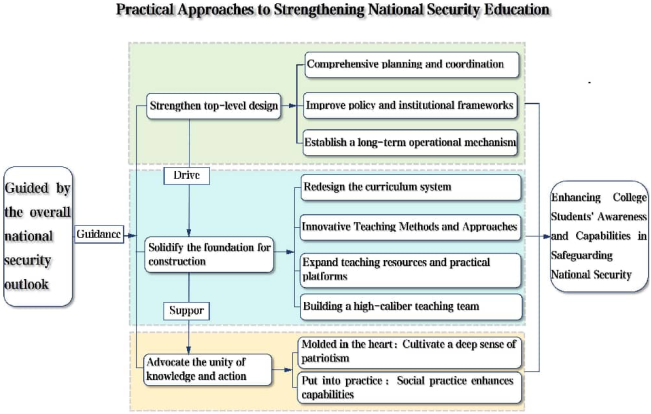
Figure 1. Practical Approaches to Strengthening National Security Education.
4.1. Strengthening Top-level Design to Achieve Scientific and Standardized Systems
The report of the 20th CPC National Congress states that “the entire Party must treat youth work as a strategic task.” As the backbone of the youth population, college students can only shoulder the historical responsibility and meet the people's high expectations by establishing a fundamental awareness of national security, attaching importance to national security construction ideologically, and actively practicing the safeguarding of national security. Advancing education on the overall national security outlook in higher education institutions not only promotes students' all-round development and fulfills the fundamental mission of fostering virtue and cultivating talent, but also resonates with the strategic demands of modernizing national security governance. Together, these efforts demonstrate the mission and responsibility of higher education in the new era to serve the broader national security agenda. The implementation and promotion of national security education require policy documents and institutional norms to advance in tandem. To achieve scientific, standardized, and institutionalized national security education, regulations must be formulated at both national and provincial levels. This involves innovating mechanisms, improving supporting frameworks, and strengthening overall planning to ensure work is guided by clear standards and practical pathways. “The overall national security outlook represents a holistic governance perspective. It is imperative to strengthen the top-level design and long-term planning of national security education, refine its content framework, innovate methodologies, and expedite the formation of a comprehensive, multi-pronged, coordinated, and standardized long-term mechanism for national security education.”
Currently, national security education in higher education institutions exhibits scattered, fragmented efforts lacking unified planning and systematic approaches. The national level must strengthen top-level design and holistic planning, aligning with the strategic needs of national security. Security education should be integrated throughout primary, secondary, and tertiary education, with progressively advanced content at each level. This requires improving educational systems and management mechanisms to establish a new framework for national security education in the new era—one characterized by vertical coordination, horizontal collaboration, and comprehensive integration.
4.2. Consolidate Foundational Work to Advance Systematization and Regularization of Security Education
4.2.1. Strengthen Curriculum Development to Enhance Educational Quality
National security education should leverage ideological and political courses while exploring specialized and interdisciplinary courses, creating a synergistic framework of “ideological courses + specialized courses + interdisciplinary courses.” Establish a multidisciplinary curriculum cluster for national security education
| [12] | Ruiying Ma, National Security Education Tutorial for Primary and Secondary Schools, Xi 'an: Shaanxi Normal University Press, 2020. pp: 231. |
[12]
, integrating its knowledge into all specialized courses. Identify points of convergence with various national security domains to embed the essence of national security. Develop specialized national security education courses tailored to students' physical and mental development patterns and cognitive characteristics, creating a series of ideologically sound and scientifically rigorous curricula that serve as exemplary models with broad influence
| [13] | XinliangDong, Danni Li, Liu Yu, National Security Education in the New Era: Basic Guidelines and Implementation Paths, Chinese Journal of Education. 2023, (03). |
[13]
Prioritize textbook development by encouraging universities to independently create digital teaching materials. Select textbooks that effectively integrate theoretical foundations with contemporary developments, and promptly update content based on global trends and national changes to enhance the timeliness of national security education.
4.2.2. Innovate Educational Methods and Tools to Invigorate Classroom Engagement
Utilize courses such as ideological and political theory and military theory to deliver foundational theoretical education on national security. Integrate the rich connotations of national security in the new era, strengthen knowledge transmission and value guidance, and cultivate students' national security awareness through multidimensional and multilevel approaches. This will enhance students' sense of identification, responsibility, and mission. Innovate teaching approaches through interactive teacher-student engagement. Employ case studies, simulation exercises, and role-playing methods. Utilize technological environments like VR virtual reality and immersive classrooms to place students in simulated scenarios. This allows them to authentically experience pressures and challenges in real-world contexts, understand diverse perspectives and viewpoints, and thereby gain deeper insights into national security issues while developing critical thinking and communication skills. Leverage the supplementary role of extracurricular activities to broaden effective channels for cultivating students' national security awareness.
Organize National Security Knowledge Day competitions and conduct safety drills, offering participatory and immersive national security education experiences to enhance student engagement.
4.2.3. Expand Teaching Resources and Practical Activities to Strengthen Student Motivation and Deepen Engagement
Leverage high-quality course resources from smart teaching platforms, disseminate national security knowledge through student-friendly channels like WeChat, Weibo, and Xiaohongshu, and facilitate online interaction. Employ activities such as plays, short videos, and photography to reconstruct real-world scenarios, thereby increasing student attention and participation in national security topics. Foster communication and collaboration between campus and off-campus entities to create a synergistic educational force. On campus, regularly organize thematic educational activities such as online quizzes, public lectures, and debate competitions. Leverage resources from campus security, military departments, and social organizations to establish multifunctional national security education practice bases integrating thematic education, simulation drills, and teacher training. Organize regular student visits and study tours to enhance national security awareness through hands-on experience.
4.2.4. Build a Professional Faculty Team to Enhance Educational Competence
Strengthening faculty development is crucial to effectively address the issue of“having qualified educators”for national security education.
| [15] | SunJing was enfeoffed as a bamboo soldier. Research on Strategies of National Security Education in Colleges and Universities, University Logistics Research, 2024. (07). |
[15]
Given the broad scope of national security education, teachers' profound theoretical expertise ensures the ideological and scientific consistency of instruction. Solid teaching skills transform textbook discourse into pedagogical language and theoretical discourse into everyday language, continuously improving students' comprehension and acceptance. Strengthen the professional development of national security education faculty by integrating key ideological and political education instructors, subject-specific teachers, and counselors into specialized teams. Leverage their respective expertise to establish a“three-dimensional education”framework. Enhance teacher training through tailored, diverse, and tiered approaches. Guide educators to develop a multidimensional, holistic understanding of national security, enabling them to grasp core concepts thoroughly, articulate key course points clearly, and elevate their professional teaching competencies.
4.3. Advocating Unity of Knowledge and Action to Boost Educators' Initiative and Proactivity
The success of national security education hinges on student participation and practice. Attention must be paid to university students' learning states and inner experiences, fully mobilizing their initiative and enthusiasm. Guide them to internalize national security education in their hearts and externalize it in their actions, cultivating a core force for safeguarding national security. Internalization requires consciously strengthening national security awareness and fortifying psychological defenses for safeguarding national security. Contemporary university students must uphold firm political stances and cultivate patriotic sentiments. Building upon a deep understanding of the overall national security outlook, they should broaden theoretical horizons and elevate ideological depth. Coordinated use of diverse educational resources should enhance emotional engagement, allowing national security awareness to take root and flourish within their hearts. Externalizing this awareness demands that students adhere to bottom-line thinking and proactively guard against risks and challenges. They should actively participate in social practice, proactively understand national conditions and public sentiment, gain a profound grasp of the new landscape, tasks, and requirements for national security, and enhance their capacity to safeguard it. They must dare to combat acts that undermine national security and be capable of effectively responding to, handling, and resolving national security challenges through proper channels and methods, thereby robustly safeguarding national security.
5. Conclusion
Stability is the foundation for national prosperity and public welfare, while turmoil brings calamity to the nation and its people. The overall national security outlook demonstrates the strategic framework for safeguarding national security, expands the intrinsic value and practical scope of national security education, and serves as the action guide for national security in the new era.“As witnesses and practitioners of the great rejuvenation of the Chinese nation, college students bear an unshirkable responsibility to uphold national security. Conducting national security education, establishing a comprehensive national security education system, diversifying teaching methods, strengthening interactive practical experiences, continuously enhancing students' awareness of national security, and effectively safeguarding national interests and security are imperative.
Abbreviations
Guidance Outline | National Security Education Guidelines for Primary, Secondary, and Higher Education Institutions |
Author Contributions
Lu Liu: Formal Analysis, Funding acquisition, Investigation, Methodology, Writing – original draft, Writing – review & editing.
Xiaoyu Si: Data curation, Funding acquisition, Methodology, Resources.
Hongxia Li: Formal Analysis, Investigation, Resources, Writing – original draft.
Qianqian Zhuang: Data curation, Methodology, Resources.
Mengmeng Sun: Project administration, Supervision.
Funding
This work is supported by the 2022 Shandong Province Major Teaching Reform Research Project titled "Research and Course Construction on Safety Education for College Students in Regular Institutions of Higher Learning." It is also supported by the Research Project of the "14th Five-Year Plan" for Adult Continuing Education in 2021, which is titled "Research on the Construction Path of Ideological and Political Education in Adult Higher Education Courses," under grant number 2021-067Y. Additionally, it is supported by the Key Teaching Reform Research Project of Shandong Province in 2024, titled "Empowering Digital Intelligence, Integrating Digital and Real Economy, Leading the Future with Digital Technology: Exploration and Practice of Cultivating Innovative Applied Talents," under grant number Z2024169. It is also supported by the Key Project of Qilu University of Technology at the University Level in 2024, titled "Empowering Digital Intelligence, Integrating Digital and Real Economy, and Leading the Future with Data: Exploration and Practical Support for the Cultivation of Innovative Applied Talents." Lastly, it is supported by the 2025 Qilu University of Technology Institutional General Teaching Research Project: Reform and Practice of Digital Intelligence-Empowered Innovation-Oriented Talent Cultivation Models in Higher Education Driven by New Quality Productivity. Recommended Provincial Teaching Reform Research Projects for 2025: Digital Empowerment in Integrating Ideological and Political Education into University Physical Education Courses: A Case Study of Basketball Curriculum; Integrating General and Specialized Education, Dual-Track Coupling, Blending Virtual and Physical Dimensions: Research and Practice of National Security Education Models; Qilu University of Technology Institutional General Projects for 2025: Reform and Practice of Digital-Intelligent Empowerment in Cultivating Innovative and Applied Talents Driven by New Quality Productivity.
Data Availability Statement
The data supporting the outcome of this research work has been reported in this manuscript.
Conflicts of Interest
The authors declare no conflicts of interest.
References
| [1] |
XiJinping, Hold High the Great Banner of Socialism with Chinese Characteristics and Unite in Striving for the Comprehensive Construction of a Modern Socialist Country - Report at the 20th National Congress of the Communist Party of China. Beijing, People's Publishing House, 2022. pp: 52.
|
| [2] |
LiuYuejin, National Security Studies. Beijing, China: University of Political Science and Law Press, 2004. pp: 25-27.
|
| [3] |
Yan Yiyong, Research on National Security Education for College Students from the Perspective of the Overall National Security Outlook, Northeast Normal University, 2023.
|
| [4] |
Wang Jingyun, Qi Xiaobo, The value implications, goal orientation and practical paths of strengthening national security awareness education in ethnic colleges and universities in the new era, Heilongjiang Ethnic Series (Bimonthly).2023,(02), 157-161.
https://doi.org/10.16415/j.cnki.23-1021/c.2023.02.024
|
| [5] |
HongxiaLi, Mingjuan Han, FangleLiui, “The Construction and Practice of the ‘Three-Tier, Five-Stage’ Teaching Model: Taking the National First-Class Undergraduate Course ‘National Security Education for College Students’ as an Example”. Chinese Higher Education Teaching. 2025, (09), 71-79.
|
| [6] |
Liru Wang, Liping Gong, Reform and Practice of “National Security Education” in Higher Education Institutions under the Perspective of the “Grand Ideological and Political Education Course”,Journal of Chengdu Institute of Technology. 2025, 28(04), 94-99.
https://doi.org/10.13542/j.cnki.51-1747/tn.2025.04.015
|
| [7] |
Wei Fang, Fang Ke,Reflections on Strengthening National Security Education for College Students from the Perspective of the Overall National Security Outlook,School Party Building and Ideological Education.2024, (08), 94-96.
https://doi.org/10.19865/j.cnki.xxdj.2024.08.027
|
| [8] |
Zijing Yao, Ping Xiao, Analysis on Strengthening National Security Education for College Students in the New Era Leadership Science Forum, 2023, (09), 130-133.
https://doi.org/10.19299/j.cnki.42-1837/C.2024.09.032
|
| [9] |
Qingsi Zhao, The Concept, Logic and Path of National Security Education in Colleges and Universities in the New Era, Ideological and Theoretical Education. 2019, (07), 99-105.
https://doi.org/10.16075/j.cnki.cn31-1220/g4.2019.07.017
|
| [10] |
WeiFang, Yuxue Huang. Preliminary Discussions on Integrating Education on the Overall National Security Outlook in Higher Education Institutions. School Party Building and Ideological Education. 2025, (18), 38-41.
https://doi.org/10.19865/j.cnki.xxdj.2025.18.009
|
| [11] |
Zhang Li, Multidimensional Thoughts on Strengthening National Security Education in Colleges and Universities from the Perspective of the Overall National Security Outlook Practical Research. 2021, (11), 99-104.
https://doi.org/10.16075/j.cnki.cn31-1220/g4.2021.11.016
|
| [12] |
Ruiying Ma, National Security Education Tutorial for Primary and Secondary Schools, Xi 'an: Shaanxi Normal University Press, 2020. pp: 231.
|
| [13] |
XinliangDong, Danni Li, Liu Yu, National Security Education in the New Era: Basic Guidelines and Implementation Paths, Chinese Journal of Education. 2023, (03).
|
| [14] |
ZhihuiLi, Xu PingLi, HaiyanGuo, Construction of National Security Education System in Colleges and Universities, Western Quality Education. 2024, (05), 67-70.
https://doi.org/10.16681/j.cnki.wcqe.202410015
|
| [15] |
SunJing was enfeoffed as a bamboo soldier. Research on Strategies of National Security Education in Colleges and Universities, University Logistics Research, 2024. (07).
|
Cite This Article
-
APA Style
Liu, L., Si, X., Li, H., Zhuang, Q., Sun, M. (2025). The Core Values and Practical Dimensions of National Security Education in Higher Education Institutions in the New Era. Science Journal of Education, 13(6), 233-240. https://doi.org/10.11648/j.sjedu.20251306.17
 Copy
|
Copy
|
 Download
ACS Style
Liu, L.; Si, X.; Li, H.; Zhuang, Q.; Sun, M. The Core Values and Practical Dimensions of National Security Education in Higher Education Institutions in the New Era. Sci. J. Educ. 2025, 13(6), 233-240. doi: 10.11648/j.sjedu.20251306.17
Copy
|
Download
AMA Style
Liu L, Si X, Li H, Zhuang Q, Sun M. The Core Values and Practical Dimensions of National Security Education in Higher Education Institutions in the New Era. Sci J Educ. 2025;13(6):233-240. doi: 10.11648/j.sjedu.20251306.17
Copy
|
Download
-
@article{10.11648/j.sjedu.20251306.17,
  author = {Lu Liu and Xiaoyu Si and Hongxia Li and Qianqian Zhuang and Mengmeng Sun},
  title = {The Core Values and Practical Dimensions of National Security Education in Higher Education Institutions in the New Era},
  journal = {Science Journal of Education},
  volume = {13},
  number = {6},
  pages = {233-240},
  doi = {10.11648/j.sjedu.20251306.17},
  url = {https://doi.org/10.11648/j.sjedu.20251306.17},
  eprint = {https://article.sciencepublishinggroup.com/pdf/10.11648.j.sjedu.20251306.17},
  abstract = {National security serves as the bedrock for enduring national stability and the steady development of society. Strengthening national security education is a fundamental strategy for consolidating national security. Throughout the course of historical development, national security has evolved alongside the formation of the state. As policy documents have become increasingly standardized, national security education has risen to become a matter of national will. Conducting national security education is a precise measure to address the century-long transformation of the world, a strong bastion for implementing the task of fostering virtue and cultivating talent, and a practical necessity for adapting to the strategic layout of national security. Through research and interviews with universities, teachers, and students in different provinces on the implementation of national security education, it was found that there are still issues that need to be addressed, such as the need to refine the system and institutional development, the need to improve and optimize curriculum development, and the urgent need to enhance the capabilities and competencies for safeguarding national security. As the primary battleground for talent cultivation and practical education, universities should focus on national security education for college students. Guided by the holistic national outlook, they should construct a scientific and rational curriculum system, innovate teaching formats and practical platforms, and foster internalized awareness and externalized actions through physical practice. This will enhance students' consciousness and capabilities in safeguarding national security, thereby providing intellectual support and talent assurance for national stability and social development.},
 year = {2025}
}
Copy
|
Download
-
TY  - JOUR
T1  - The Core Values and Practical Dimensions of National Security Education in Higher Education Institutions in the New Era
AU  - Lu Liu
AU  - Xiaoyu Si
AU  - Hongxia Li
AU  - Qianqian Zhuang
AU  - Mengmeng Sun
Y1  - 2025/12/30
PY  - 2025
N1  - https://doi.org/10.11648/j.sjedu.20251306.17
DO  - 10.11648/j.sjedu.20251306.17
T2  - Science Journal of Education
JF  - Science Journal of Education
JO  - Science Journal of Education
SP  - 233
EP  - 240
PB  - Science Publishing Group
SN  - 2329-0897
UR  - https://doi.org/10.11648/j.sjedu.20251306.17
AB  - National security serves as the bedrock for enduring national stability and the steady development of society. Strengthening national security education is a fundamental strategy for consolidating national security. Throughout the course of historical development, national security has evolved alongside the formation of the state. As policy documents have become increasingly standardized, national security education has risen to become a matter of national will. Conducting national security education is a precise measure to address the century-long transformation of the world, a strong bastion for implementing the task of fostering virtue and cultivating talent, and a practical necessity for adapting to the strategic layout of national security. Through research and interviews with universities, teachers, and students in different provinces on the implementation of national security education, it was found that there are still issues that need to be addressed, such as the need to refine the system and institutional development, the need to improve and optimize curriculum development, and the urgent need to enhance the capabilities and competencies for safeguarding national security. As the primary battleground for talent cultivation and practical education, universities should focus on national security education for college students. Guided by the holistic national outlook, they should construct a scientific and rational curriculum system, innovate teaching formats and practical platforms, and foster internalized awareness and externalized actions through physical practice. This will enhance students' consciousness and capabilities in safeguarding national security, thereby providing intellectual support and talent assurance for national stability and social development.
VL  - 13
IS  - 6
ER  -
Copy
|
Download

 ,
Hongxia Li*,
,
Hongxia Li*,




 Share This Article
 Twitter
 Linked In
 Facebook